
Deciding whether to consider medication for your mental health can feel like a big step.
Maybe you’ve been dealing with anxiety for months. Perhaps depression is making everyday responsibilities harder than they used to be. You may already be seeing a therapist but still feel like something is missing. Or perhaps you’ve taken medication before and are wondering whether it’s time to revisit your treatment.
There isn’t one universal moment when someone “should” begin medication. Mental health care is personal, and medication is only one of several tools that may be considered as part of treatment.
But there are signs that may indicate it is worthwhile to have the conversation with a qualified mental health provider.
Here are five.
1. Your Symptoms Are Starting to Interfere With Everyday Life
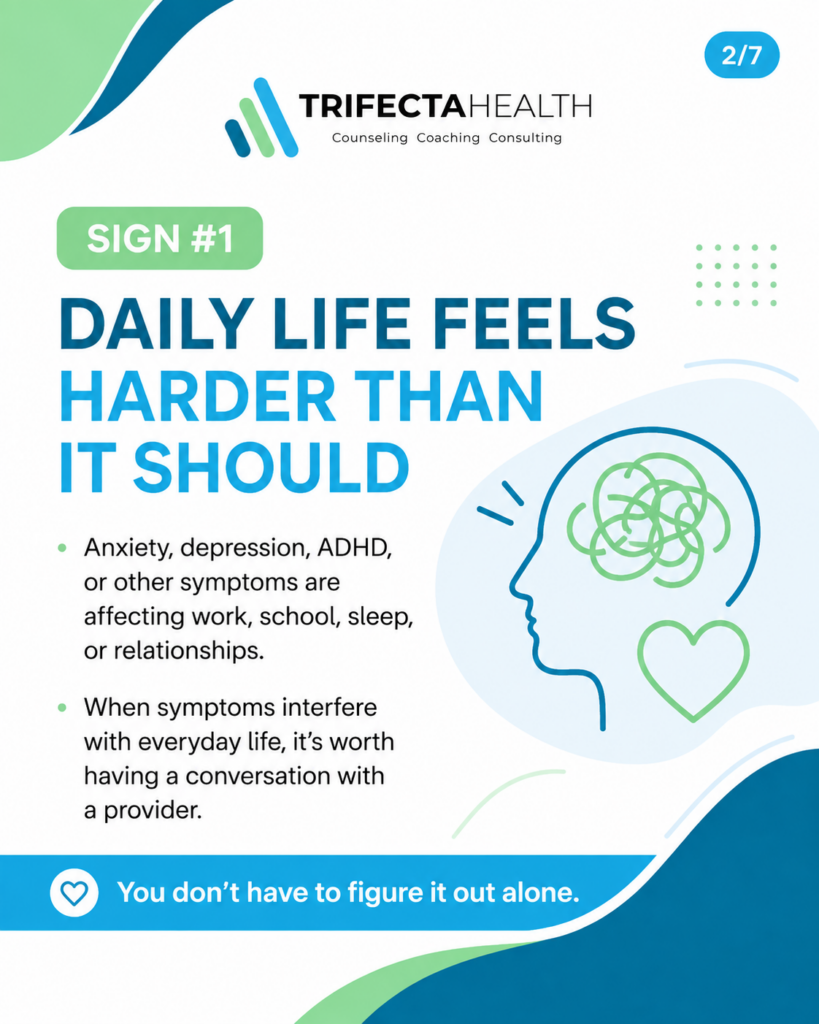
Everyone experiences stress, worry, sadness and difficult periods. The question is often less about whether you experience these feelings and more about how much they are affecting your ability to function.
You might notice that:
- Getting out of bed or starting the day has become difficult.
- Anxiety regularly keeps you from doing things you want or need to do.
- Your sleep has changed significantly.
- Concentrating at work or school feels much harder.
- You have stopped enjoying activities or relationships that once mattered to you.
- Your emotions feel increasingly difficult to manage.
When symptoms begin affecting your work, relationships, school, sleep or daily responsibilities, it may be time to talk with a professional about what you’re experiencing.
That conversation doesn’t automatically mean medication will be recommended. Instead, it creates an opportunity to look at your symptoms, health history, goals and treatment options together.
2. You’ve Been Working on Your Mental Health but Still Feel Stuck
Therapy can be an incredibly valuable part of mental health care.
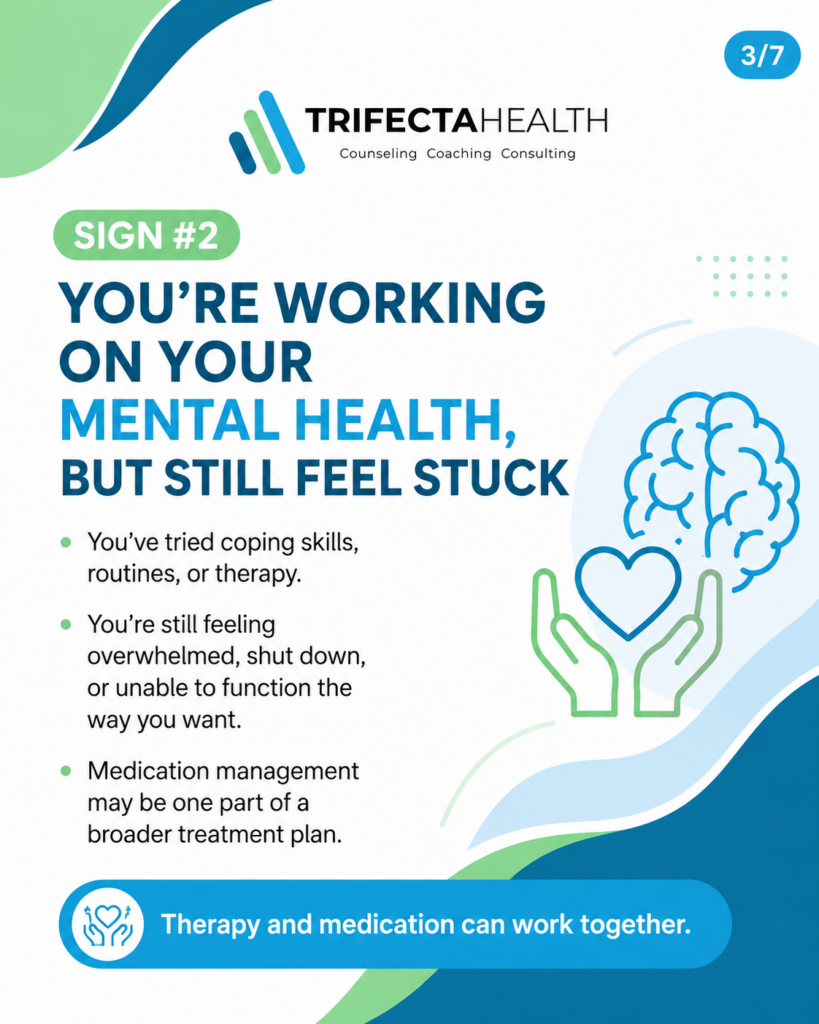
For some people, therapy and changes to sleep, exercise, routines, relationships or stress management provide the support they need. For others, symptoms may continue even when they are actively working on their mental health.
If you’ve been going to therapy, practicing coping strategies or making lifestyle changes but continue to struggle, medication may be worth discussing as another possible component of your treatment.
Medication and therapy don’t have to be an either-or decision.
In some situations, they can complement one another. Medication may help reduce certain symptoms while therapy helps you develop skills, understand patterns and make longer-term changes.
The right approach depends on the individual.
3. Anxiety, Depression or Mood Changes Feel Increasingly Difficult to Control
Mental health symptoms can sometimes become more intense gradually.
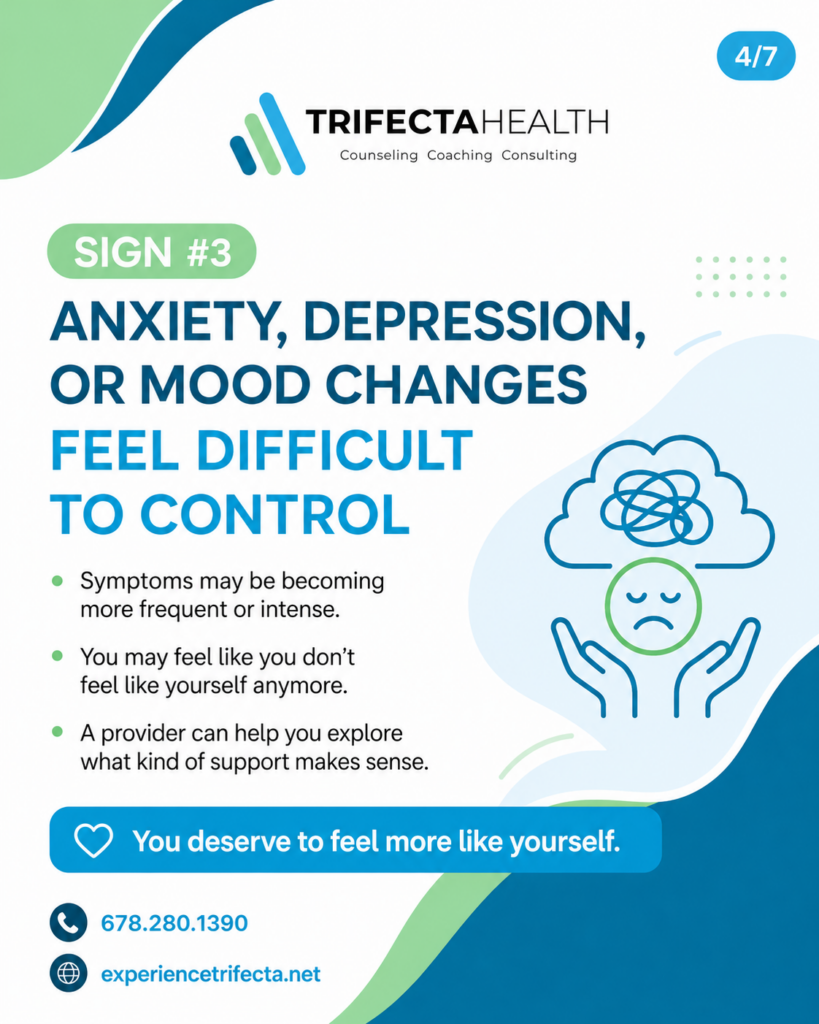
What began as occasional worry may turn into anxiety that feels present most days. A period of sadness might develop into persistent low mood, lack of motivation or difficulty enjoying life. Mood changes might become more disruptive or unpredictable.
When you find yourself thinking, “I don’t feel like myself anymore,” it’s worth paying attention.
A mental health evaluation can help determine what may be contributing to those changes and what treatment options make sense.
Medication management may be considered for conditions such as depression, anxiety disorders, bipolar disorder and other mood-related concerns. The goal isn’t simply to prescribe medication. It is to understand what you’re experiencing and determine whether medication could appropriately support your overall treatment.
4. A Medication You’re Already Taking Doesn’t Seem to Be Working Like It Used To
Medication management isn’t only for people who have never taken psychiatric medication before.
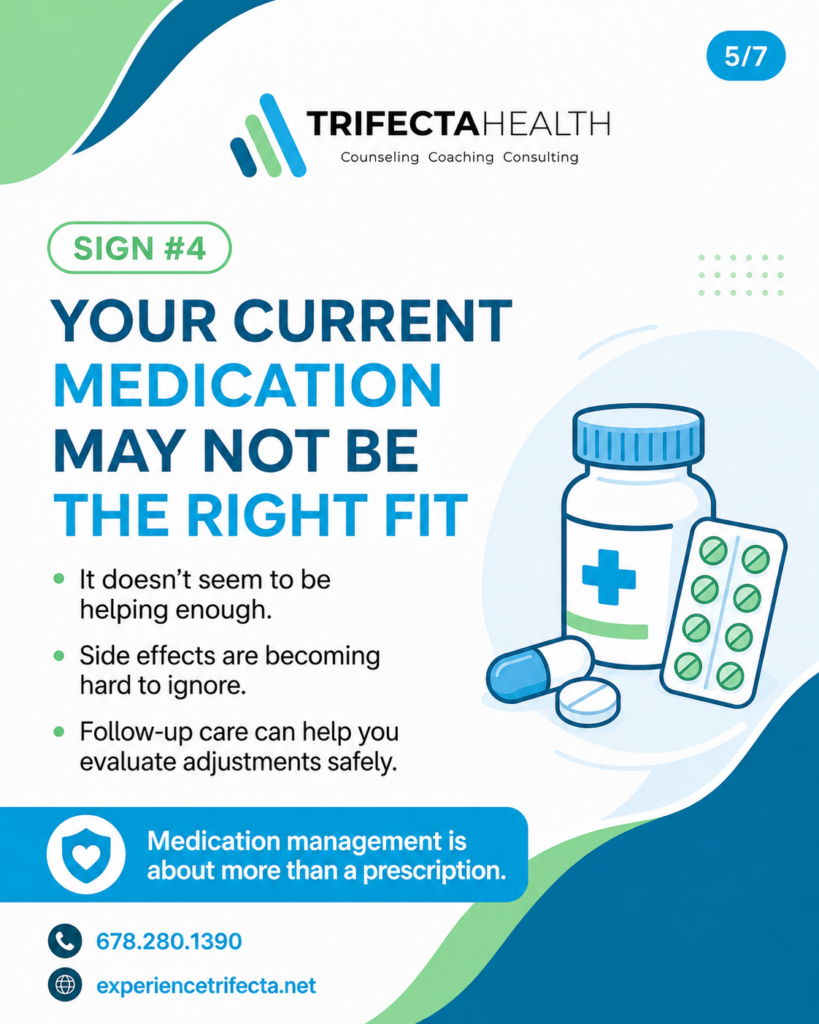
Maybe you were prescribed medication by another provider and initially felt better, but your symptoms have returned. Perhaps you’re experiencing side effects. Or you’ve been taking the same prescription for some time without ever really knowing whether it’s the best fit.
Those are all reasonable reasons to schedule a medication-management appointment.
Effective medication management involves more than writing a prescription.
Follow-up conversations allow your provider to evaluate how you’re responding, discuss side effects or concerns, and determine whether adjustments are needed.
Never stop or change a prescription medication on your own without first talking with the clinician managing your care.
5. You’re Simply Wondering Whether Medication Could Help
You don’t need to reach a crisis before talking with someone about your options.
Sometimes the biggest sign that it’s time for a conversation is simply that you’ve started asking the question.
Could medication help me feel better?
An evaluation gives you a place to ask that question without committing you to a particular treatment.
A medication-management provider can talk with you about your symptoms, previous treatment, physical health, medications, family history and goals. From there, you can discuss potential benefits, risks, side effects and alternatives.
The decision should be collaborative.
You should understand why a medication is being considered, what it is intended to address and what to expect if it becomes part of your treatment plan.
What Happens During a Medication Management Appointment?
If you’ve never had a psychiatric medication-management appointment before, you might picture a very short conversation followed by a prescription.
Thoughtful medication management should involve much more than that.
Your first appointment may include a discussion of:
- The symptoms you’ve been experiencing
- How long they’ve been occurring
- Your mental and physical health history
- Medications and supplements you currently take
- Previous medications or treatments
- Sleep, stress and daily functioning
- Your goals for treatment
- Questions or concerns you have about medication
If medication is appropriate, your provider can explain the available options and help you make an informed decision.
Treatment doesn’t end when a prescription is written. Follow-up appointments are an important part of the process so your provider can monitor your progress, discuss side effects and determine whether the treatment plan needs to change.
Your Physical and Mental Health Are Connected
Mental health doesn’t exist separately from the rest of your body.
Sleep problems, hormonal changes, chronic health conditions, medications, pain and other physical factors can affect how you feel emotionally. Likewise, prolonged anxiety, depression and stress can influence how you feel physically.
That’s one reason a whole-person perspective can be valuable when considering psychiatric medication.
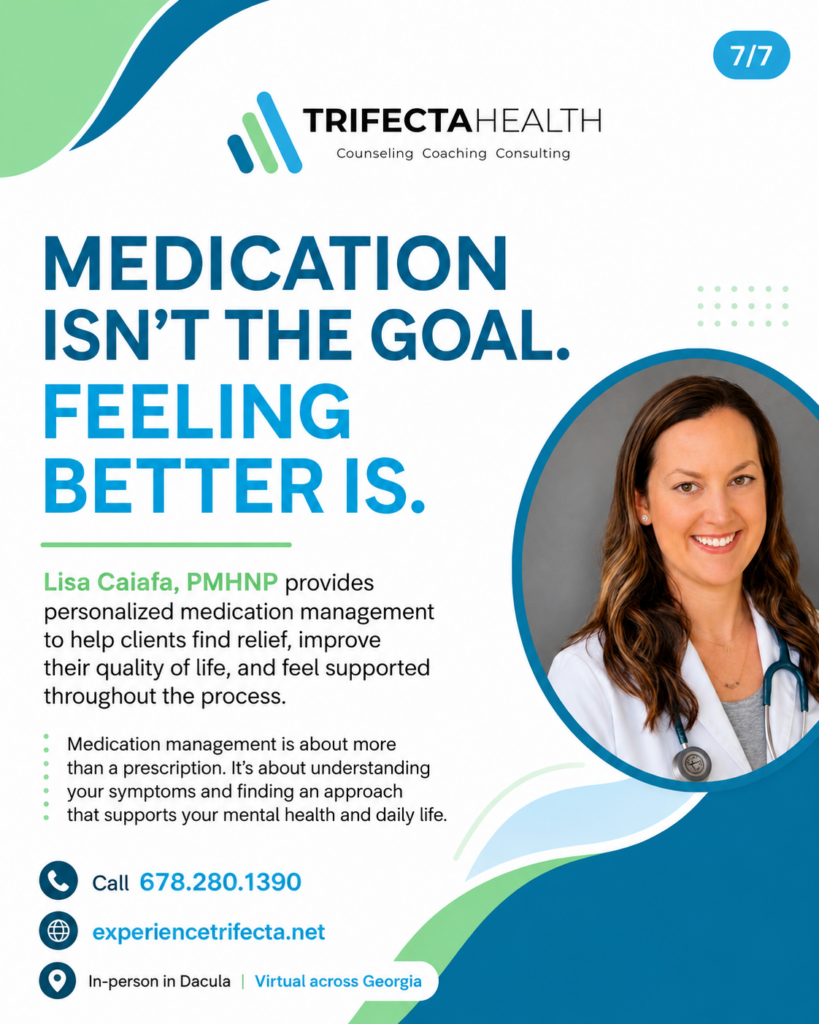
At Trifecta Health, our medication-management approach considers the broader picture rather than focusing on symptoms in isolation. We want to understand what’s happening in your life, what you’re experiencing physically and emotionally, and what you ultimately want treatment to help you accomplish.
Finding Medication Management Near Hamilton Mill and Dacula
For residents of Dacula, Hamilton Mill and surrounding communities, accessing mental health care shouldn’t always mean traveling farther into metro Atlanta.
Trifecta Health provides in-person mental health services at our Dacula office on Braselton Highway, convenient to the Hamilton Mill area. Virtual services are also available for clients throughout Georgia.
That flexibility can make ongoing medication-management appointments easier to incorporate into work, school and family schedules.
You Don’t Have to Know the Answer Before You Make the Appointment
One of the most important things to understand about medication management is that you don’t have to decide in advance that you want medication.
You can start with a conversation.
Tell your provider what’s happening. Ask questions. Talk about what’s working and what isn’t. Discuss your concerns about medication as openly as your reasons for considering it.
The goal is to find an approach that makes sense for you.
For some people, that may include medication. For others, therapy, lifestyle changes or another form of support may be more appropriate. And for many people, effective mental health care involves a combination of approaches that evolves over time.
Ready to Explore Your Options?
If you’re experiencing anxiety, depression, mood changes or other mental health concerns and are wondering whether medication management could help, Trifecta Health can help you explore your next step.
Our team provides personalized mental health care in Dacula, Georgia, including medication management and counseling, with virtual options available throughout Georgia.
You don’t need to know exactly what kind of help you need before reaching out. Start by telling us what you’re experiencing, and we’ll help you determine the next step.