

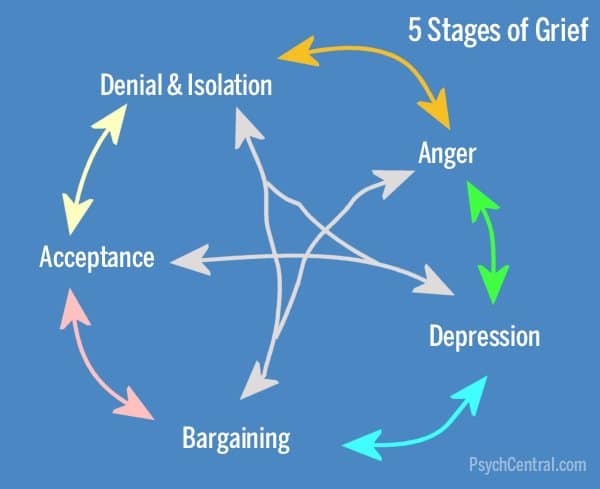
We’ve all heard of the five stages of grief. Denial. Anger. Bargaining. Depression. Acceptance.
The way they’re often taught — listed neatly in order, like rungs on a ladder — makes it easy to assume that acceptance is the finish line. The reward at the end of the hard work. The place where the pain finally stops.
It isn’t. Acceptance is, for most people, the hardest stage of all.
What Acceptance Actually Means
There’s a common misconception that acceptance means being okay with what happened — that it signals some kind of emotional resolution, a door closing cleanly on the loss. But that’s not what acceptance is. Acceptance doesn’t mean the loss was okay. It doesn’t mean you’ve stopped missing the person, the relationship, the future you imagined, or the version of yourself that existed before.
Acceptance means you’ve stopped fighting reality.
That distinction matters enormously, because fighting reality is actually comfortable in a strange way. Anger keeps you close to what you lost. Bargaining gives you a sense of control. Even depression, as heavy as it is, can feel like the appropriate weight of love — like you’re still holding on.
Acceptance asks you to set down the fight. And that can feel like a second loss.
Why It’s So Hard
Acceptance often gets confused with moving on, and many grievers resist it for exactly that reason. To accept the loss can feel like a betrayal — as if allowing life to continue somehow diminishes what was lost, or what it meant to you.
There’s also the terrifying openness of it. When you stop bargaining, stop raging, stop waiting for things to be different, you’re left standing in the plain fact of your new reality. No buffer. No fight to distract you. Just: this is how things are now.
That kind of groundlessness is genuinely frightening, and it requires a level of courage that rarely gets acknowledged.
Acceptance Isn’t Linear — And It Isn’t Final
One of the most important things to understand is that reaching acceptance once doesn’t mean you stay there. Grief is not a one-way journey. You may find acceptance in the quiet of a Tuesday, then lose it entirely on a birthday, a holiday, or some random afternoon when a song comes on the radio.
That’s not failure. That’s grief doing what grief does.
Acceptance is less a destination and more a practice — something you arrive at, lose, and find again. Over time, most people find it easier to return to. The visits get longer. The losses less destabilizing.
Give Yourself Time
If you’re sitting somewhere in the middle of your grief and acceptance feels impossibly far away, that’s okay. There is no deadline. The stages aren’t a prescription; they’re a description of territory that many people pass through, in their own order, at their own pace.
Grief is one of the most universally human experiences — and one of the most isolating. If you’re struggling, reaching out to a therapist or counselor isn’t a sign that your grief is too much. It’s a sign that you’re taking it seriously.
And that’s exactly what it deserves.
Ready to find support? Trifecta Health makes it easy to connect with a licensed provider who’s right for you. Match with a provider at experiencetrifecta.net.